
Operational Guidance
A collection of practical ideas for strengthening how your artisan business operates. The articles are organized to help you examine your business step by step—from customer inquiries and everyday workflows to shared knowledge, decision-making, profitability, and the thoughtful use of technology. You can follow them in sequence as a guide or explore the subjects most relevant to your business today.

How to Get Your Shop's Know-How Out of One Person's Head
In most shops, the answers to everyday questions live with one or two people, so the work quietly depends on who's in that day. Here are three simple steps and a 20-minute weekly meeting that move that know-how into the whole team.

Do You Actually Know How Your Customers Found You?
Most frame shop owners have a sense of how new customers find them, but few know for sure. A simple habit, shared by the whole team, turns everyday counter conversations into the clearest guide to where your marketing time and money should go.

Beyond The Hedge Exists at the Intersection of Craftsmanship, Business, and Technology
Craftsmanship, business, and technology are often treated as separate disciplines, but some of the greatest opportunities for artisan businesses exist where they come together. This article explores how craftsmanship provides purpose, business provides structure, and technology provides leverage—and why strengthening the connections between them can create a more resilient and valuable business.

Why Good Inquiries Slip Through the Cracks
Good inquiries don't slip away because a business isn't trying hard enough — they slip away because no single place holds the whole picture of who reached out and what's owed to them. This article shows how one organized record turns scattered follow-up into a habit, and reveals which inquiries are actually worth chasing.

Could Better Inbox Management Improve Customer Satisfaction and Sales?
Most artisan shops don't have a communication problem — they have a follow-up problem. Once a customer message arrives by email, Instagram, or in person, it's easy for a pending decision, a quote, or a promised update to quietly get lost in the shuffle. This piece looks at what it actually takes to make sure nothing slips through — using a custom framing shop as the example.

Craftsmanship Doesn't Stop at the Workbench
Craftsmanship extends far beyond the quality of the finished product. For an artisan business, the way customers are welcomed, projects are managed, information is shared, and work moves through the shop all reflect the same standards. Operational Craftsmanship means bringing that same care, thoughtfulness, and attention to detail to the business behind the craft.

Can Everyone See What They Need to Know About the Job?
Most shops don't have a missing-information problem — they have a *hidden*-information problem, where the full story of a job is scattered across emails, memory, and paperwork instead of one visible place. Beyond The Hedge's Job Workflow Visibility System is a practical, six-stage method for finding those gaps and building the smallest shared system that closes them — without replacing what already works.

Where Should You Start Improving an Artisan Business?
Most artisan business owners can identify several things they would like to improve. The harder question is deciding which improvement will actually make the greatest difference. A useful place to begin is not with a new tool or a major overhaul, but by understanding how the business works and following one important workflow closely enough to see where change matters most.

Are You Attracting the Customers Who Value What You Do?
The article explores how artisan businesses can attract better-aligned customers by making the expertise, judgment, care, and value behind their work visible before the customer ever begins a conversation with them.

Could technology help you focus more on the craft?
Technology earns a place in an artisan business only when it's tested against a real bottleneck, never adopted for its own sake. This piece makes the case for starting with where skilled people lose time to searching, checking, and repeating — and letting that answer decide whether the fix is better information, a simple automation, or AI.

Does Every Job Follow the Process You Think It Does?
Most business owners know how work is *supposed* to move through their business. But what happens when you follow one actual job, step by step, from the first customer conversation through final delivery?
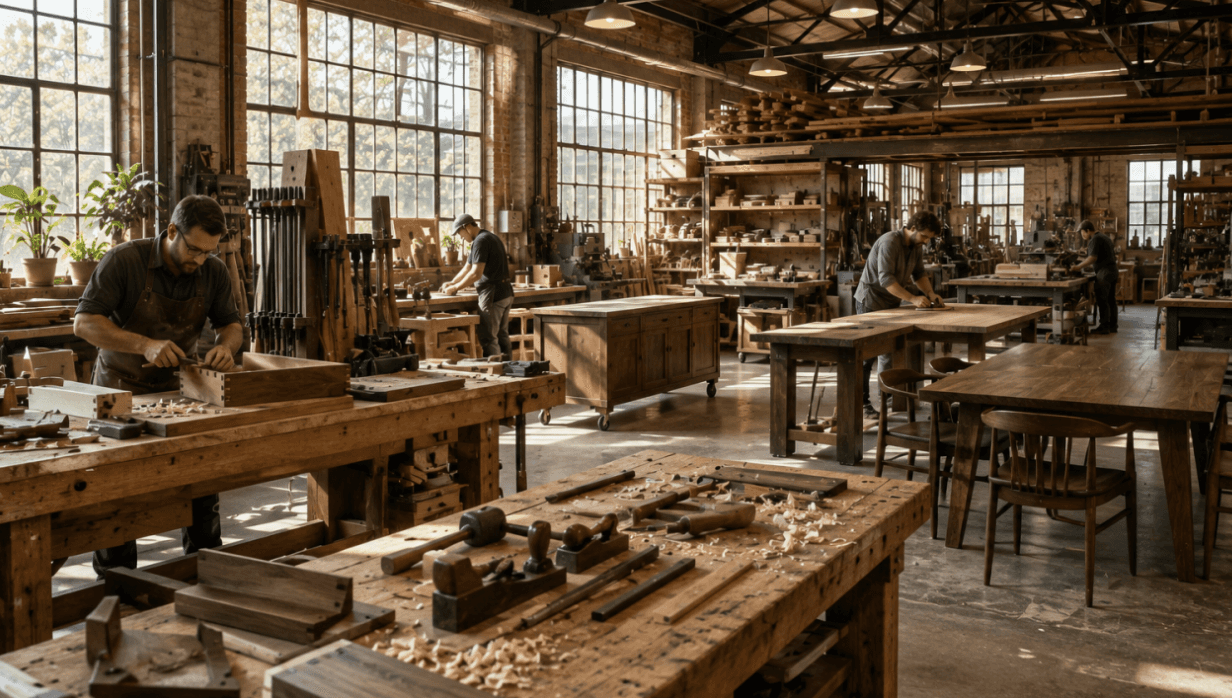
Is Your Business Delivering the Experience You Intended?
Every interaction shapes how customers experience your business, from the first conversation through final delivery. For an artisan business, intentionally designing those moments helps ensure the care, quality, and attention invested in the craftsmanship are reflected throughout the entire customer experience.

Does Everyone Work from the Same Playbook
As an artisan business grows, maintaining consistent quality depends on everyone sharing the same understanding of how work should be done. A common playbook helps ensure that customer interactions, production decisions, and quality standards consistently reflect the craftsmanship and expectations of the business.

Growth Changes Everything
As artisan businesses grow, the work becomes more complex as more people, decisions, and handoffs become part of each project. This article explores why the informal ways of working that succeed in a small shop can begin to strain with growth—and how greater operational clarity helps the business expand without making the owner responsible for holding everything together.